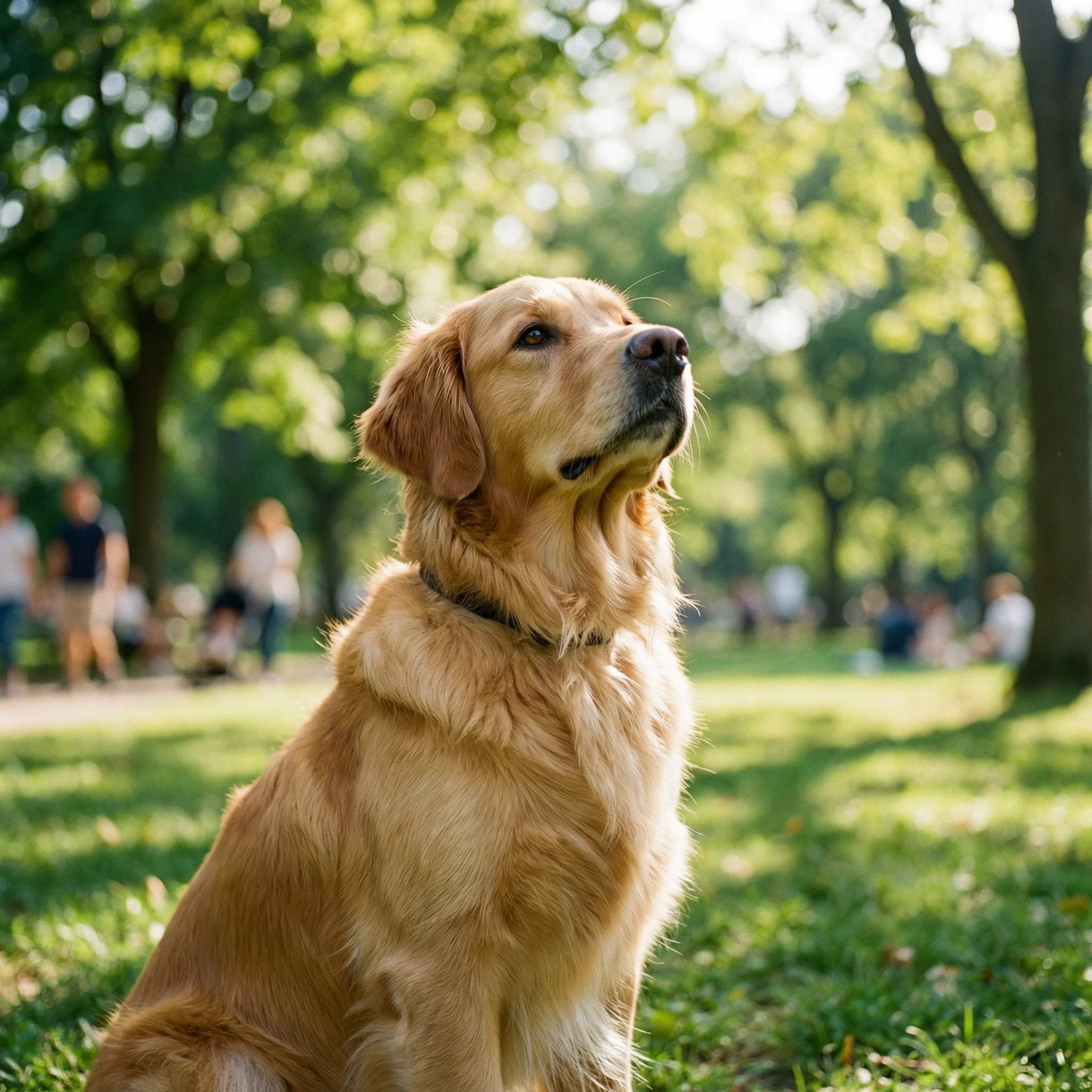
Training & Behavior
Positive reinforcement techniques to raise a well-mannered, obedient Golden Retriever.
Why Goldens Are Easy to Train
Golden Retrievers consistently rank among the most trainable dog breeds. Their intelligence, combined with an innate desire to please their owners, makes training sessions productive and enjoyable. They respond exceptionally well to positive reinforcement methods, thriving on praise, treats, and play rewards.
Puppy Training Basics
Housebreaking & Potty Training
Ideal Age: 8-16 weeks
- Take puppy out every 1-2 hours, after meals, and after naps
- Choose a designated potty spot and use a cue word ('Go potty')
- Reward immediately with treats and praise when they go outside
- Never punish accidents—clean with enzyme cleaner and move on
- Crate training accelerates housebreaking (dogs won't soil their den)
Crate Training
Ideal Age: 8-12 weeks
- Introduce crate gradually with treats and toys inside
- Feed meals in the crate to create positive associations
- Start with short periods (5-10 minutes) and gradually increase
- Never use crate as punishment—it should be a safe haven
- Puppies can hold bladder for 1 hour per month of age (max 8 hours)
Bite Inhibition
Ideal Age: 8-18 weeks
- Puppies explore with their mouths—this is normal behavior
- Yelp loudly and stop play when puppy bites too hard
- Redirect to appropriate chew toys immediately
- Freeze and turn away if biting continues—remove attention
- Consistency is key—everyone in household must follow same rules
Socialization
Ideal Age: 8-16 weeks (critical period)
- Expose puppy to various people, dogs, sounds, and environments
- Keep experiences positive—never force fearful interactions
- Puppy classes provide safe, controlled socialization
- Visit pet-friendly stores, parks, and neighborhoods
- Handle paws, ears, mouth daily to prepare for grooming/vet visits
Essential Obedience Commands
Sit
Difficulty: Easy
How to Teach:
Hold treat above nose, move it back over head. Dog's bottom will naturally lower. Say 'Sit' as they sit, then reward immediately.
Pro Tips:
First command to teach. Practice before meals and walks. Add hand signal (palm up) for non-verbal cue.
Stay
Difficulty: Medium
How to Teach:
Ask dog to sit. Hold palm out and say 'Stay.' Take one step back. If they stay, return and reward. Gradually increase distance and duration.
Pro Tips:
Start with 3-5 seconds. Don't call them to you—return to them to reward. Build duration before distance.
Come (Recall)
Difficulty: Hard
How to Teach:
Start indoors with no distractions. Say dog's name + 'Come!' in excited voice. Reward generously when they arrive. Never punish after recall.
Pro Tips:
NEVER call dog to you for something unpleasant (bath, nail trim). Practice daily. Use long leash outdoors initially.
Down
Difficulty: Medium
How to Teach:
From sit position, hold treat at nose and slowly lower to ground between paws. Say 'Down' as they lie down. Reward.
Pro Tips:
Some dogs resist this submissive position. Be patient. Lure with treat, don't push them down.
Leave It
Difficulty: Medium
How to Teach:
Place treat in closed fist. Dog will sniff/lick. When they back away, say 'Leave it' and reward with different treat from other hand.
Pro Tips:
Life-saving command. Practice with increasing temptations. Eventually use for dropped food, trash, etc.
Heel (Loose Leash)
Difficulty: Hard
How to Teach:
Dog walks beside you without pulling. Stop walking when leash tightens. Resume when they return to your side. Reward frequently.
Pro Tips:
Most challenging command. Requires consistency. Consider front-clip harness. Practice in low-distraction areas first.
Common Behavioral Issues
Jumping on People
Why It Happens:
Excitement and seeking attention. Rewarded when people pet them while jumping.
Solution:
Turn away and ignore when they jump. Only give attention when all four paws are on ground. Teach 'Sit' to greet people. Be consistent—everyone must follow same rule.
Excessive Chewing
Why It Happens:
Teething (puppies), boredom, anxiety, or insufficient exercise.
Solution:
Provide appropriate chew toys (Kongs, nylon bones). Rotate toys to keep interest. Increase exercise and mental stimulation. Crate when unsupervised. Redirect to toy when caught chewing inappropriate items.
Barking
Why It Happens:
Alerting, boredom, attention-seeking, or anxiety. Goldens aren't excessive barkers but can develop habit.
Solution:
Identify trigger. Don't yell (they think you're barking too). Teach 'Quiet' command. Reward silence. Address underlying cause (boredom, anxiety). Desensitize to triggers gradually.
Pulling on Leash
Why It Happens:
Natural pace is faster than humans. Excitement about walk. Lack of training.
Solution:
Stop walking when leash tightens. Resume when slack. Reward walking beside you. Use front-clip harness. Practice in boring areas first. Consider professional trainer for severe cases.
Separation Anxiety
Why It Happens:
Goldens bond deeply and hate being alone. Can develop destructive behavior, barking, or house soiling.
Solution:
Practice short departures. Don't make leaving/returning dramatic. Crate training helps. Leave puzzle toys. Exercise before leaving. Consider doggy daycare. Severe cases need professional help.
Resource Guarding
Why It Happens:
Protecting food, toys, or space. More common if dog has scarcity history.
Solution:
Never punish growling (it's communication). Trade for higher-value item. Hand-feed meals. Practice 'Drop it' and 'Leave it.' Add to bowl while eating. Consult trainer if severe.
Golden Rules of Training
Keep Sessions Short
5-10 minutes for puppies, 15-20 for adults. End on success to keep motivation high.
Consistency is Everything
Use same words and hand signals. All family members must follow same rules.
Positive Reinforcement Only
Reward desired behavior immediately. Never use physical punishment or harsh corrections.
Timing Matters
Reward within 1-2 seconds of desired behavior. Dog must connect action with reward.
Patience & Repetition
Learning takes time. Repeat commands 20-30 times before expecting reliability.
Gradually Increase Difficulty
Master command in quiet environment before adding distractions. Build slowly.