
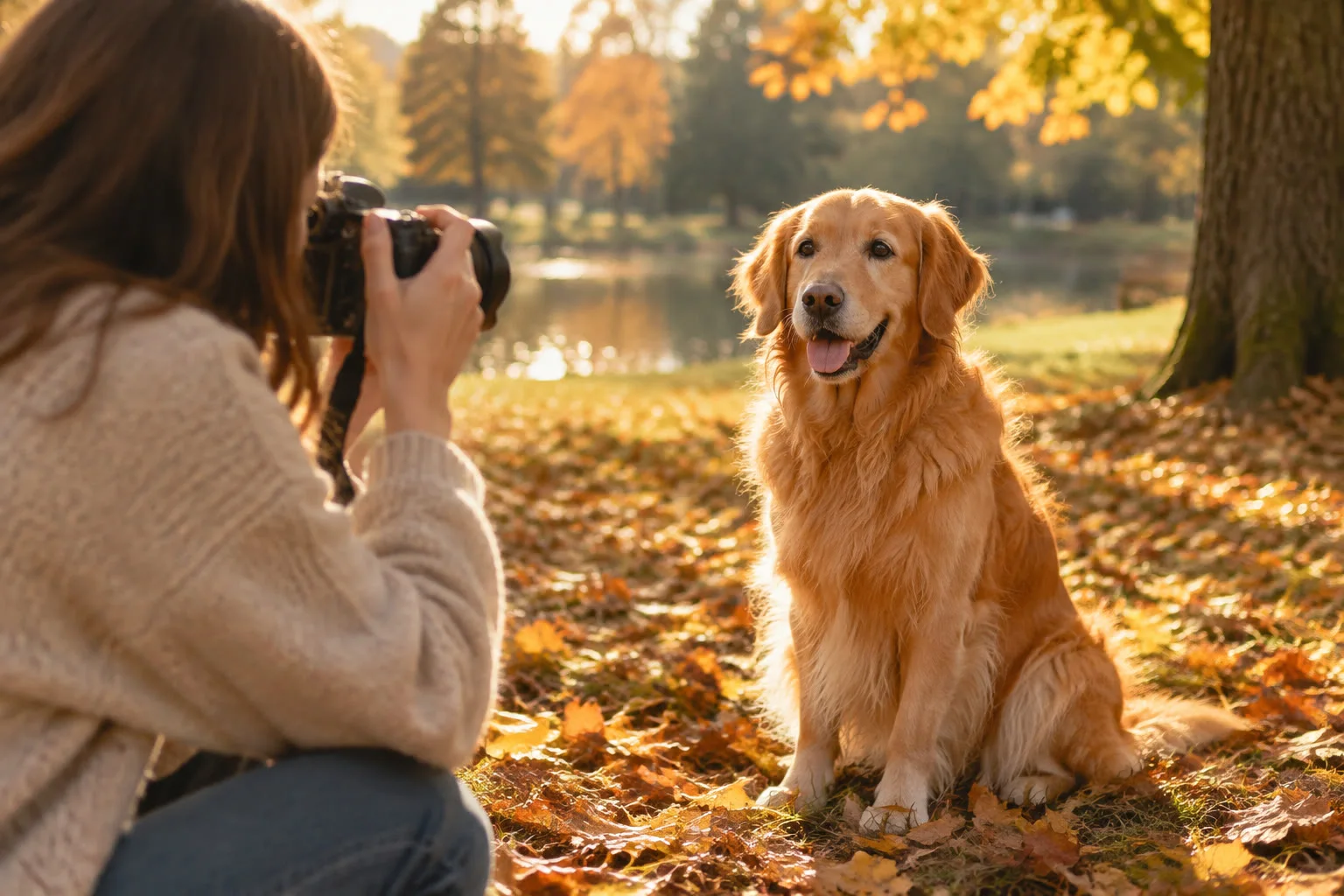
You know the photos. The tail wag that turned into a smear. The perfect pose abandoned one millisecond before the shutter. The 47 nearly identical shots of the floor. Photographing a golden retriever is an exercise in joyful frustration, but a few small changes will fill your camera roll with keepers instead of blur.
Chase the light, not the dog
The single biggest improvement costs nothing: move the session to good light. Early morning and late afternoon sun are warm and soft, and a golden's coat was practically designed for them. Indoors, face the windows. A dog lit from the front glows; a dog lit from behind becomes a silhouette with whiskers.
Skip the flash. It startles, it flattens, and it produces the famous laser-eye look. Natural light and a slightly faster shutter will beat it every time.
Phone cameras want one extra step: tap the screen on the dog's face before shooting, so the exposure and focus land on the eyes instead of the bright background. Eyes sharp, everything forgives; eyes soft, nothing saves it.
Backgrounds matter more than equipment. Before you lift the phone, take one step to the left or right so the dog is framed against something calm, a fence, a hedge, a plain wall, instead of the recycling bins. The difference between snapshot and portrait is usually three feet of sideways effort and a background that lets all that golden fur glow.
It also helps to think like the dog. Photograph what they love, not what you posed: the spot by the window, the toy of the month, the exact face reserved for the treat jar. A photo of a golden doing his favorite thing will always beat a photo of a golden tolerating yours.
Shade is the secret weapon on bright days. Open shade beside a building or under a tree gives you soft, even light with no squinting, and a golden's coat reads rich instead of washed out. Harsh noon sun is for landscapes, not dogs.
The two-minute session
Structure beats luck. Decide the one shot you want before the dog knows a camera exists, set up the light and the background first, then bring the golden in for a two-minute session with treats flowing. Quit after two minutes whether or not you got it, because a dog who learns that cameras end quickly stays willing forever.
The candid sessions need the opposite approach: keep the phone in your pocket and ready, because the best golden photos happen at zero notice. The head tilt at a new sound lasts one second. The sleeping pose of maximum ridiculousness lasts one sneeze. The camera you can draw fastest is the best camera you own.
The assistant trick: one person the dog loves, standing directly behind you, holding the good treats next to your lens. Every soulful, eyes-locked portrait you have ever admired was made by exactly this arrangement.
Work with the energy
Do not ask a wound-up dog for a portrait. Take photos after the walk or the game of fetch, when the panting smile comes out and the world has slowed down. That open-mouth, tongue-lolling grin is the golden's most honest face, and it only appears once the wiggles have been spent.
Get on their level, literally. Photos taken lying on the floor or crouched at dog height feel like portraits. Photos taken from standing height feel like evidence. Keep a squeaky toy or a treat near the lens for that alert, ears-up look, and take the shot the instant the head tilts.
Sound effects expire fast, so spend them wisely. The first squeak earns the head tilt of the century; the fifteenth earns a yawn. Save the noisemaker for the shot you actually want, and let the in-between frames be the relaxed ones.
Shoot more than you need
Burst mode is your friend. Take ten frames of everything, because frame eight is often the one where the ears, eyes, and tail all agree. Then, and this is the part everyone skips, sit down once a month and actually delete the near-misses. A camera roll of 200 good photos is a treasure. A roll of 12,000 unsorted ones is a junk drawer.
For the shots that make the final cut, keep a golden day in the album covers how to keep them meaningfully, and the first year in twelve photos gives them a structure.
The blur is not a failure
One last thing: keep a few of the blurry ones. The mid-shake ear flop, the launch off the couch, the nose arriving at the lens before the rest of the dog. Sharp photos show what your golden looked like. The blurry ones show what living with one felt like.
And take the boring video now and then: thirty seconds of the walk, the greeting, the eating-the-dinner dance. Photos freeze the face. Video keeps the motion, and the motion is the dog.
Keep reading
More memory keeping: Keep a Golden Day in the Album and The First Year in Twelve Photos.
Made with a little extra love for golden retrievers.